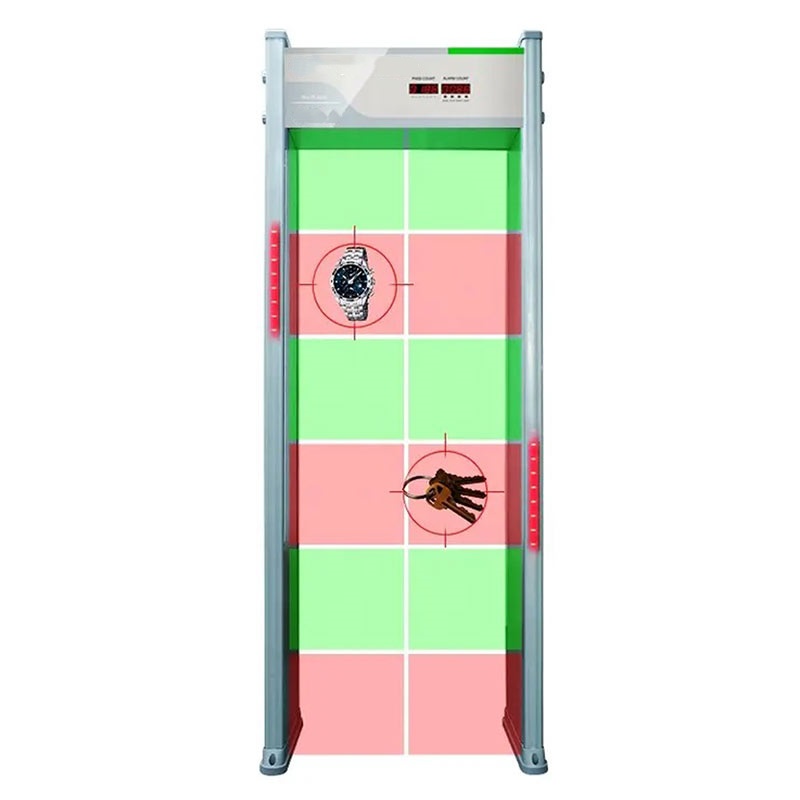
A 12‑zones door‑frame metal detector (12‑zone DFMD) is a high‑precision multi‑zone screening device widely deployed within a security guard system. Compared with 6‑zone models, this equipment divides the full‑height archway into twelve independent, overlapping vertical detection zones. When concealed metal weapons or forbidden metal articles are detected, corresponding LED zone indicators illuminate to show the fine‑grained approximate height position of metal objects on human bodies. Security staff can then use a handheld metal detector to quickly pinpoint threats without broad full‑body scanning. Sintronic 12‑zones door‑frame metal detectors have been delivered for overseas security projects including the Colombia shipment reference project.
Core Working Principle of 12‑Zones Door‑Frame Metal Detector
Sintronic 12‑zones door‑frame metal detector adopts digital pulsed‑induction electromagnetic technology. Multiple groups of independent transmitter‑receiver coil pairs are embedded on both sides of the arch frame to form twelve separate vertical detection sections covering from head down to feet. The complete detection workflow is shown below.
1. Power‑on self‑check & multi‑zone magnetic‑field generation
After power‑on initialization and self‑diagnosis, each of the twelve coil groups generates its own stable pulsed low‑frequency electromagnetic field, covering different vertical height sections across the passage. Operators can set independent sensitivity parameters for every single zone according to on‑site security requirements.
2. Magnetic‑field disturbance triggered by metal objects
When a pedestrian walks through the archway carrying concealed metal items, eddy currents will be induced inside the metal. It generates reverse secondary magnetic field and disturbs the local electromagnetic field of one or several detection zones. Only receiver coils of disturbed zones capture abnormal signal data.
3. DSP signal processing & zone‑targeted alarm trigger
Built‑in DSP digital signal processor analyzes signal amplitude from each of the twelve zones separately. Once the signal exceeds preset sensitivity threshold, the detector activates combined audio‑visual alarm: buzzer beeps, meanwhile the LED indicator lights corresponding to disturbed vertical zones illuminate.
Key feature for 12‑zone model: It provides much finer vertical positioning than 6‑zone units. Security guards know more precisely which body segment the metal threat locates on, greatly narrowing inspection scope and accelerating pedestrian throughput at busy checkpoints.
4. Reset and prepare for next pedestrian screening
After security personnel finish secondary inspection and handling for alarmed persons, the detector automatically resets all zone status and stands by for the next passing‑through pedestrian.

 Indonesia
 Malaysia
 Saudi Arabia
 United States
 South Africa
 Germany
 Russia
 Italy
Italy Portugal
 Vietnam
 Zimbabwe
 South Korea
 Ruben| Project Manager | Sintronictech is good