An X‑Ray baggage scanner is an essential screening device in a complete security guard system. While walk‑through metal detectors and handheld metal scanners check human bodies for concealed threats, the X‑ray baggage scanner inspects the interior of bags, luggage, parcels and briefcases without opening them manually. It creates color‑coded inner‑content images, helping security staff identify weapons, explosives, flammable liquids and other prohibited items. Sintronic X‑ray baggage scanners are widely deployed for overseas public‑venue security projects across Middle‑East, Africa and Southeast‑Asia markets.
Core Working Principle of X‑Ray Baggage Scanner
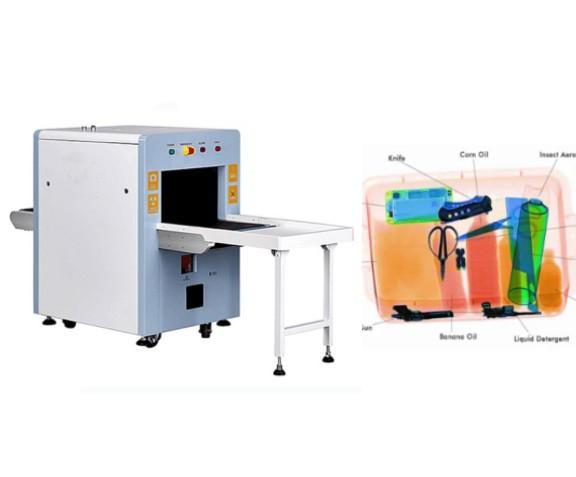
Sintronic X‑ray baggage scanner adopts dual‑energy X‑ray detection technology. The whole unit includes X‑ray generator, lead‑shielded inspection tunnel, conveyor belt, multi‑channel detector array and image‑processing console. The full inspection workflow is as follows.
1. Baggage feeding into inspection tunnel
Security personnel place luggage or parcels onto the motor‑driven conveyor belt. The belt transports items steadily into the lead‑shielded scanning tunnel. Lead shielding prevents X‑ray leakage and guarantees operator and bystander safety during continuous operation.
2. Controlled low‑dose X‑ray emission & penetration
Inside the tunnel, the X‑ray tube emits fan‑shaped low‑dose dual‑energy X‑ray beams passing through the baggage. Different materials absorb X‑rays at different rates, determined by material density and atomic number. Dense metal objects absorb more X‑ray energy; organic substances such as plastic, food and liquid absorb less radiation.
3. Signal capture & digital conversion
Detector arrays installed opposite the X‑ray source capture residual X‑ray signals after penetrating baggage. Physical signals are converted into digital data and sent to the built‑in image‑processing unit.
4. Color‑coded image rendering for operator review
The system analyzes high‑energy and low‑energy signal differences and renders color‑coded real‑time images on the operator monitor:
Orange: Organic materials: food, water, plastic, suspected explosives
Blue: Inorganic high‑density materials: knives, guns and metal weapons
Green: Mixed composition of organic and inorganic materials, such as glass and ceramics.
Trained security operators interpret the visual image to spot suspicious articles. Advanced models support auxiliary AI threat‑alert function to highlight high‑risk objects and lower human‑judgment errors.
5. Baggage output & follow‑up security handling
After scanning, the conveyor belt moves baggage out of the tunnel. If prohibited goods are identified, security guards will perform manual physical inspection of the corresponding bag.

 Indonesia
 Malaysia
 Saudi Arabia
 United States
 South Africa
 Germany
 Russia
 Italy
Italy Portugal
 Vietnam
 Zimbabwe
 South Korea
 Ruben| Project Manager | Sintronictech is good